

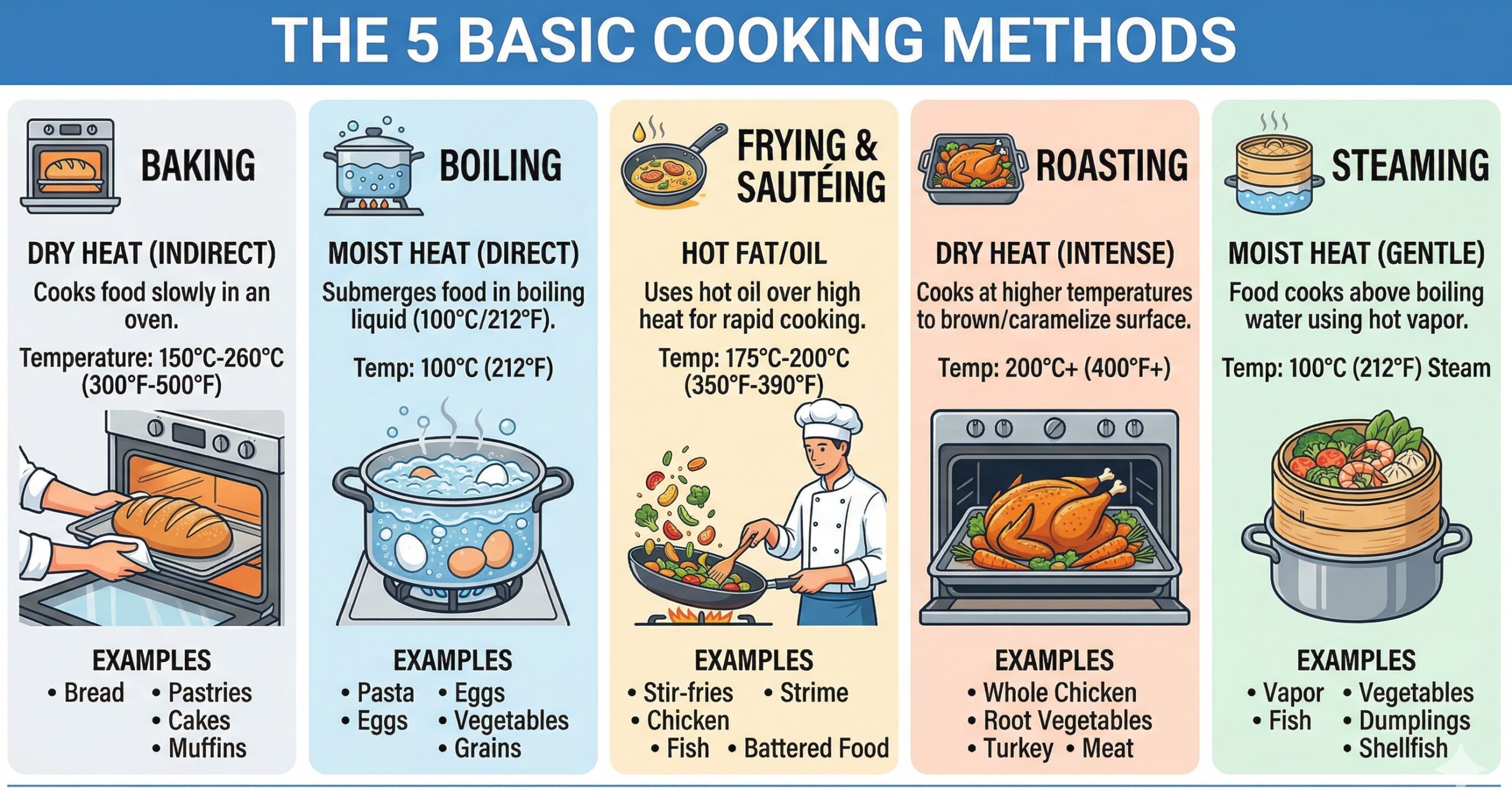
While the culinary world has dozens of specific techniques, they can generally be boiled down to five fundamental cooking methods. These methods are categorized by how heat is transferred to the food—either through dry heat, moist heat, or hot fat.
Here are the five basic cooking methods:
1. Baking
Baking uses dry, indirect heat to cook food from the outside in, typically inside an oven. The hot air surrounds the food, cooking it evenly.
Best for: Bread, pastries, cakes, and casseroles.
-
Temperature range: Usually between 150°C and 260°C.
2. Boiling
Boiling is a moist-heat method where food is completely submerged in a liquid (usually water or broth) that is heated to its boiling point (100°C at sea level). You will see large, rolling bubbles rapidly breaking the surface.
-
Best for: Pasta, tough root vegetables, eggs, and creating stocks.
Note: Because of the aggressive agitation of the bubbles, delicate foods can break apart if boiled too vigorously.
3. Frying (and Sautéing)
Frying involves cooking food in hot fat or oil. The fat transfers heat quickly and creates a crisp, browned exterior through the Maillard reaction. This category scales from sautéing (using a small amount of oil over high heat) to deep-frying (completely submerging the food in hot oil).
-
Best for: Meats, stir-fries, potatoes, and battered foods.
-
Temperature range: Usually between 175°C and 190°C for deep frying.
4. Roasting
Roasting is very similar to baking, as it also uses dry, ambient heat in an oven. The main difference is the type of food being cooked and the heat application. Roasting is typically used for items that have a solid structure before cooking (like meat or vegetables) and often utilizes higher temperatures to achieve a browned, flavorful crust.
Best for: Whole poultry, large cuts of meat, and root vegetables.
5. Steaming
Steaming is a gentle, moist-heat method where food is placed above boiling water, allowing the rising hot steam to cook it. Because the food never touches the boiling water, it retains its shape, color, texture, and a high percentage of its water-soluble nutrients.
-
Best for: Vegetables, fish, dumplings, and delicate proteins.

Leave a Reply