
How to Create a Monthly Budget for Beginners (Step-by-Step Guide) 1
Creating a monthly budget is one of the smartest financial habits you can develop. Whether you’re trying to save money, pay off debt, or simply gain better control of your finances, a budget gives every dollar a purpose.
The good news? Budgeting doesn’t have to be complicated. Even if you’ve never created a budget before, you can build one in less than an hour and improve it over time.
In this guide, you’ll learn exactly how to create a monthly budget from scratch.
Learning how to create a monthly budget for beginners is the first step toward achieving financial stability. This guide explains how to create a monthly budget for beginners using simple and practical steps.
Why Is a Monthly Budget Important?
A Step-by-Step Guide
A monthly budget helps you:
- Understand where your money goes.
- Avoid overspending.
- Build an emergency fund.
- Reach savings goals faster.
- Reduce financial stress.
- Prepare for unexpected expenses.
- Make smarter financial decisions.
Instead of wondering where your paycheck disappeared, you’ll know exactly how every dollar is being used.
Step 1: Calculate Your Monthly Income
How to Create a Monthly Budget for Beginners
Start by determining your total monthly income.
Include:
- Salary after taxes
- Freelance income
- Side hustle earnings
- Rental income
- Government benefits
- Investment income (if consistent)
If your income changes each month, calculate your average income from the last 6–12 months.
Example
Monthly salary: $3,200
Freelance work: $400
Total monthly income: $3,600
Step 2: Track Your Monthly Expenses
How to Create a Monthly Budget for Beginners
The next step is knowing where your money goes.
Review:
- Bank statements
- Credit card statements
- Digital wallets
- Cash spending
Separate your expenses into categories.
Fixed Expenses
These usually stay the same every month.
Examples:
- Rent or mortgage
- Insurance
- Car payment
- Internet
- Phone bill
- Loan payments
Variable Expenses
These change every month.
Examples:
- Groceries
- Fuel
- Dining out
- Entertainment
- Shopping
- Utilities
Occasional Expenses
Don’t forget expenses that don’t happen every month.
Examples:
- Car maintenance
- Annual subscriptions
- Holiday gifts
- Birthdays
- Medical bills
Step 3: List Your Financial Goals
Your budget should support your goals.
Examples include:
- Save $5,000 for an emergency fund.
- Pay off credit card debt.
- Save for a vacation.
- Buy a house.
- Build retirement savings.
- Start investing.
When you know why you’re budgeting, staying motivated becomes much easier.
Step 4: Choose a Budgeting Method
There isn’t a single “perfect” budget.
Here are three beginner-friendly methods.
1. 50/30/20 Budget Rule
Allocate:
- 50% for needs
- 30% for wants
- 20% for savings and debt repayment
This is ideal for beginners because it’s simple and flexible.
2. Zero-Based Budget
Every dollar gets assigned a job.
Income minus expenses should equal zero.
Example:
Income: $3,500
Expenses + Savings = $3,500
Nothing is left unplanned.
If you’re wondering how to create a monthly budget for beginners, tracking your expenses accurately is one of the most important steps in the budgeting process.
3. Envelope Budgeting
Assign spending categories to envelopes.
Examples:
- Groceries
- Entertainment
- Gas
- Dining Out
When the envelope is empty, stop spending.
This method works especially well for people who struggle with impulse purchases.
Choosing the right budgeting method makes it much easier to create a monthly budget for beginners and stay consistent every month.
Step 5: Create Your Budget
Here’s a simple example.
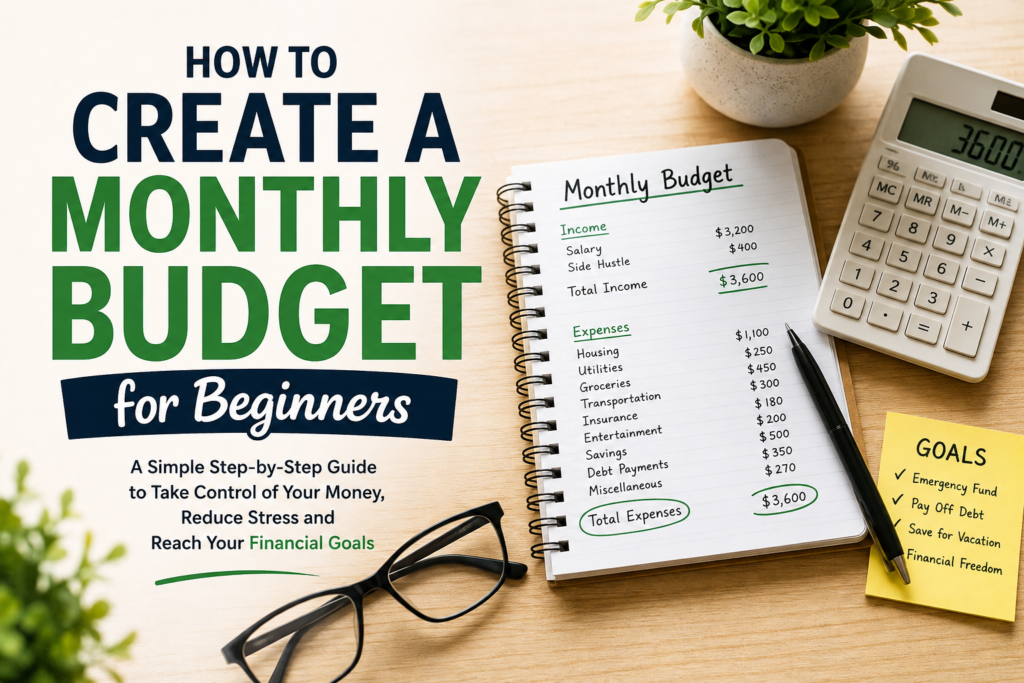
| Category | Amount |
|---|---|
| Income | $3,600 |
| Rent | $1,100 |
| Utilities | $250 |
| Groceries | $450 |
| Transportation | $300 |
| Insurance | $180 |
| Entertainment | $200 |
| Savings | $500 |
| Debt Payments | $350 |
| Miscellaneous | $270 |
Every dollar has a purpose.
Step 6: Cut Unnecessary Expenses
Look for areas where you can save money.
Ideas include:
- Cancel unused subscriptions.
- Cook at home more often.
- Buy generic brands.
- Reduce impulse shopping.
- Compare insurance rates.
- Use cashback apps.
- Shop with a grocery list.
Small savings add up quickly over time.
Step 7: Build an Emergency Fund
Unexpected expenses happen.
Aim to save:
- $500 as a starter goal.
- Then one month of expenses.
- Eventually three to six months of living expenses.
As a member of a credit union, you have access to various financial tools and resources that can help you manage your budget more effectively:
- Financial Counseling: Take advantage of financial counseling services offered by your credit union for personalized advice and guidance. A financial counselor can provide insights into your budgeting strategy and help you identify areas for improvement.
- Workshops and Seminars: Attend budgeting and financial literacy workshops hosted by your credit union to enhance your money management skills. These workshops often cover a range of topics, from basic budgeting to advanced investing strategies, providing valuable knowledge to help you succeed financially.
Join a Financial Community
Consider joining a financial community or group within your credit union. Engaging with others who are also focused on budgeting and saving can provide motivation, support, and accountability. Sharing experiences and tips can make the budgeting process more enjoyable and less daunting.
An emergency fund helps prevent debt when life throws surprises your way.
Step 8: Track Your Budget Weekly
Many people create a budget but never review it.
Spend just 10–15 minutes each week to:
- Compare actual spending with your plan.
- Adjust categories if needed.
- Identify overspending.
- Celebrate progress.
Consistency matters more than perfection.
Step 9: Adjust Your Budget Every Month
Your financial situation changes.
Maybe:
- You received a raise.
- Rent increased.
- Utility bills changed.
- You started a new side hustle.
Update your budget monthly to keep it realistic.
Common Budgeting Mistakes
Avoid these beginner mistakes:
- Not tracking spending.
- Forgetting irregular expenses.
- Setting unrealistic limits.
- Giving up after one bad month.
- Ignoring savings.
- Using credit cards without a plan.
Remember, budgeting is about progress—not perfection.
Best Budgeting Tools
Helpful tools include:
- Google Sheets
- Microsoft Excel
- EveryDollar
- YNAB (You Need A Budget)
- PocketGuard
- Goodbudget
Choose the tool that fits your lifestyle.
Tips for Sticking to Your Budget
- Pay yourself first.
- Automate savings.
- Review spending weekly.
- Avoid emotional shopping.
- Set realistic goals.
- Reward yourself for milestones.
- Involve your family if you share finances.
The easier your budget is to follow, the more likely you’ll stick with it.
Frequently Asked Questions
How much should I save each month?
A good starting point is saving at least 20% of your income if possible. If that’s not realistic, save whatever you can and increase the amount over time.
What’s the easiest budgeting method?
The 50/30/20 rule is often the easiest for beginners because it’s simple and flexible.
Should I budget if my income changes every month?
Yes. Base your budget on your average monthly income or use your lowest expected monthly income to avoid overspending.
How often should I review my budget?
Review your budget every week and make adjustments at the end of each month.
Final Thoughts
Learning how to create a monthly budget is one of the best investments you can make in your financial future. A budget isn’t about restricting your life—it’s about giving yourself the freedom to spend with confidence while working toward your goals.
Start simple, stay consistent, and remember that every small improvement adds up over time. Whether you’re saving for an emergency fund, paying off debt, or planning your next big purchase, a monthly budget provides the roadmap to financial success.
The best time to start budgeting was yesterday. The second-best time is today.