

1. Introduction
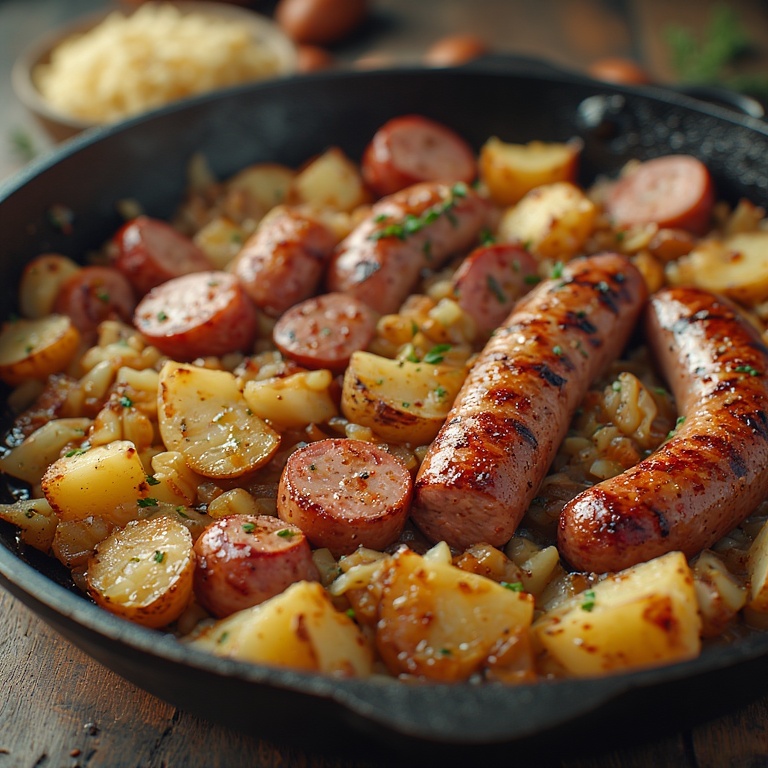
Polish Sausage with Sauerkraut and Potatoes (often referred to as a variation of Kiełbasa z Kapustą) is a quintessential Eastern European comfort meal. This one-pan skillet dish brings together the smoky, robust flavors of traditional kiełbasa, the tangy complexity of fermented sauerkraut, and the earthy heartiness of golden potatoes. It is a rustic, soul-warming meal that perfectly balances salty, sour, and savory notes, making it a timeless favorite for chilly evenings and family gatherings alike.
2. Ingredients
-
The Meat:
-
500g (1 lb) Polish Kiełbasa, sliced into rounds or large chunks
-
-
The Base:
-
500g (1 lb) Sauerkraut, drained and rinsed (if you prefer a milder tang)
-
3-4 large yellow potatoes, peeled and cubed
1 medium yellow onion, thinly sliced
-
-
The Seasoning & Liquids:
-
2 tablespoons vegetable oil or lard
-
1 cup chicken or beef broth
-
1 teaspoon caraway seeds (essential for authentic flavor)
-
1 teaspoon smoked paprika
-
Salt and freshly cracked black pepper to taste
-
-
Garnish:
-
Fresh dill or parsley, chopped
3. Instructions
-
-
Parboil the Potatoes: Place the cubed potatoes in a pot of salted water. Bring to a boil and cook for 8-10 minutes until nearly tender but still firm. Drain and set aside.
-
Sear the Sausage: In a large heavy-duty skillet or cast-iron pan, heat the oil over medium-high heat. Add the kiełbasa slices and sear until they are browned and slightly crispy on both sides. Remove the sausage from the pan and set aside.
-
Sauté Aromatics: In the same pan (using the rendered fat), add the sliced onions. Sauté for 5 minutes until softened and translucent.
-
Combine Ingredients: Add the parboiled potatoes to the skillet. Fry them with the onions for 3-4 minutes until they pick up some golden color.
-
Simmer: Stir in the sauerkraut, caraway seeds, and smoked paprika. Pour in the broth and return the browned sausage to the pan.
-
The Finish: Reduce heat to medium-low, cover, and simmer for 10-15 minutes. This allows the potatoes to absorb the smoky juices and the sauerkraut to mellow.
-
-
Serve: Remove the lid, increase heat for a final minute to cook off excess liquid if desired, and garnish generously with fresh dill.
4. Variations
-
Apple Infusion: Add a thinly sliced Granny Smith apple along with the sauerkraut for a touch of sweetness that cuts through the saltiness.
-
Beer Braised: Replace half of the broth with a light lager or pilsner for a deeper, maltier flavor profile.
-
Sheet Pan Version: Toss all ingredients in oil and spices and roast on a large baking sheet at 200°C (400°F) for 30 minutes for a hands-off approach.
5. Serving and Storage
-
Serving: This dish is a complete meal on its own, but it pairs wonderfully with a side of spicy brown mustard and a thick slice of rye bread.
-
Storage: Leftovers are arguably better the next day! Store in an airtight container in the refrigerator for up to 4 days.
-
Reheating: Reheat in a skillet over medium heat with a splash of water or broth to keep the sauerkraut moist.
6. Benefits
-
Probiotic Potential: Sauerkraut is a fermented food that supports gut health (though some probiotics are lost during cooking, it remains highly digestible).
-
High in Vitamin C: Cabbage is naturally high in Vitamin C and fiber.
-
Iron & Protein: The kiełbasa provides a solid source of iron and protein, making this a highly satiating meal.
7. History of Kiełbasa and Kapusta
The combination of Kiełbasa (sausage) and Kapusta (cabbage/sauerkraut) is the backbone of Polish culinary identity, with roots stretching back to the medieval period. Historically, these ingredients were staples because they were easily preserved for the long, harsh winters of Northern and Eastern Europe. Cabbage was fermented into sauerkraut to keep through the spring, and meat was cured and smoked into sausages to ensure a protein source year-round.
The most famous version of this flavor profile is Bigos, often called “Hunter’s Stew,” which is considered the national dish of Poland. Legend has it that King Władysław Jagiełło served bigos to his hunting parties in the 14th century. While Bigos is a complex, multi-day stew, the “Skillet Sausage and Sauerkraut” emerged as a more practical, everyday version of these flavors for working-class families who needed a quick, hot meal after a day in the fields.
In the 19th and 20th centuries, as Polish immigrants moved to the United States and Canada, they brought these recipes with them, cementing “Kiełbasa and Kraut” as a beloved comfort food in the Midwest and Great Lakes regions. Today, the dish represents a bridge between Old World preservation techniques and modern “one-pan” convenience, remaining a symbol of hospitality and heritage at festivals and family tables worldwide.
-
-


Leave a Reply